Somewhere along the line, our students have been taught that because of climate change, the world is going to end before they reach a ripe old age. Somehow the idea that the earth’s climate goes through cycles is not mentioned. Also not mentioned is the fact that in the past the earth’s climate has changed drastically, and we are still here. Remember, they have found plant fossils deep under the ice in Greenland. Aside from the destruction of the scientific method, what our children are being taught also has real-world consequences.
Marketwatch posted an article yesterday with the following headline, “Young people blame climate change for their small 401(k) balances.”
The article reports:
Lori Rodriguez, a 27-year-old communications professional in New York City, is not saving for retirement, and it isn’t necessarily because she can’t afford to — it’s because she doesn’t expect it to matter.
Like many people her age, Rodriguez believes climate change will have catastrophic effects on our planet. Some 88% of millennials — a higher percentage than any other age group — accept that climate change is happening, and 69% say it will impact them in their lifetimes. Engulfed in a constant barrage of depressing news stories, many young people are skeptical about saving for an uncertain future.
“I want to hope for the best and plan for a future that is stable and secure, but, when I look at current events and at the world we are predicting, I do not see how things could not be chaotic in 50 years,” Rodriguez says. “The weather systems are already off, and I don’t think it’s hyperbolic to be a little apocalyptic.”
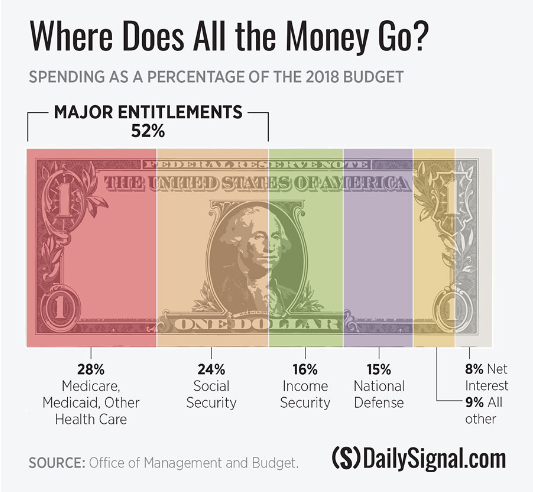
It’s a fairly safe bet that Social Security will not exist by the time she is old enough to retire, so if the world chooses not to end before then, she will be up a creek without a paddle.
The article lists other consequences of what our children are taught regarding climate change:
Mental-health issues affecting young adults and adolescents in the U.S. have increased significantly in the past decade, a study published in March in the Journal of Abnormal Psychology found. The number of individuals between the ages of 18 and 25 reporting symptoms of major depression increased 52% from 2005 to 2017, while older adults did not experience any increase in psychological stress at this time, and some age groups even saw decreases. Study author Jean Twenge says this may be attributed to the increased use of digital media, which has changed modes of interaction enough to impact social lives and communication. Millennials are also said to suffer from “eco-anxiety,” according to a 2018 report from the American Psychological Association, with 72% saying their emotional well-being is affected by the inevitability of climate change, compared with just 57% of people over the age of 45.
The article concludes:
Similarly, Rodriguez said that, even without the threat of climate change, she likely couldn’t afford to save for retirement — and might not need to. Because she comes from a Latina family, she says culturally it is expected she would move in with family in old age and not have to pay as much in retirement costs.
“Both of my parents are immigrants. I did not grow up in a culture of professionalism. I graduated with thousands in student loans — I have never made enough money to save for the future,” she says.
Although she does not save money for retirement, Rodriguez does take action for the future: she’s taught herself to garden (“in case of a total collapse of the food system,” she says) and invests in learning hands-on skills like mechanics and bike repair.
“It’s kind of my own version of retirement,” she says.
Erin Lowry, author of “Broke Millennial Takes On Investing,” recommends preparing for retirement no matter what you believe will happen, referencing the Y2K phenomenon, when some people sold their belongings and made other rash choices in the belief that the world would end with the dawn of the year 2000.
“Even if you have a defeatist mind-set about the future of the planet, it’s better to prepare as though you, and the planet, will survive into your retirement years because the alternative is also bleak,” she said. “Failing to properly plan for a future means guaranteeing yourself a more difficult life.”
The baby boomers survived hiding under their desks in case of nuclear attack and the Vietnam war. We grew up to be tough old birds (with a few exceptions). I don’t think the problem here is the teaching on climate change–I think the problem is raising children without the moral foundation our country was built on. I also think parents need to let their children fail occasionally. Everyone shouldn’t get a trophy.