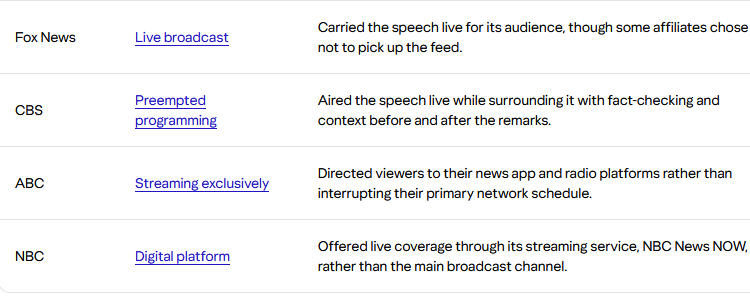
Last week, President Trump made a speech about Chinese interference in the 2020 election and provided links to the evidence. Two networks refused to air the speech and one network only aired the criticism. It was as if it was no big deal to have another country interfere in our elections. The mainstream media worked hard to play down the importance of the interference. Just for the record, it wasn’t always this way.
On Monday, Just the News reported:
When the Biden Justice Department announced that Chinese hackers had gotten their hands on Great Britain’s publicly available voter files in 2024, American news media clamored with stories claiming it was a “dangerous” breach. The same, too, when U.S. officials announced Russia and Iran had hacked small numbers of U.S. voter files in 2020 and 2021.
The reason was simple: U.S. intelligence agencies believe the targeting and acquisition of voter registration files is an act of election interference. “Election interference is a subset of election influence targeted at the technical aspects of the election, including voter registration, casting and counting of ballots and reporting of results,” an October 2020 National intelligence Council report on election interference explains.
In other words, the compromising of election voter registration data, is, by the definition of intelligence agencies, an act of election interference.
When President Donald Trump presented confirmed evidence last Thursday night that China had compromised and obtained 220 million American voter registration files, the news media swung 180 degrees in the opposite direction. They argued it was old news (it was not) and not a big deal because you can buy limited data in America related to voter registration commercially. According to security experts, that limited data accessibility is not the same thing.
…In 2021, the Biden Justice Department indicted two Iranian hackers for accessing just 100,000 voter files from a single state where it is also commercially available. They were charged with criminally interfering in the 2020 election even though voter files are commercially available in limited form.
Hopefully the people who actually see the double standard outnumber the people who still either have their eyes closed or suffer from Trump Derangement Syndrome.