Fixing Something That Was Broken

The H1-B Visa program has come under scrutiny in recent years because it has been abused by American companies. We have all heard the story about Disney employees being forced to train their foreign replacements. Disney imported workers because foreign workers will work for less money and fewer benefits. It was about their bottom line. That wasn’t the intention of the H1-B Visa.

On Saturday, Amuse On X posted an article about a recent Executive Order by President Trump designed to fix the abuses in the H1-B Visa program.

The article reports:

A company can tell its investors in the morning that it needs fewer workers and tell Washington in the afternoon that it cannot find enough of them. Closing a semiconductor fab in Ohio and hunting for a chip designer in Austin can produce both sentences honestly. The harder case is when the two sentences describe the same desks. For more than 30 years, nobody in the federal government was assigned to sort one from the other. On September 18, President Trump signed an executive order that gives that comparison to the agencies already charged with reviewing H-1B sponsorship.

…Last December 14, defending the president’s $100,000 fee, I wrote that no bureaucrat could tell a real shortage from wage arbitrage and that price should do the screening. The same week as the new order, a companion proclamation renewed that payment for certain petitions through September 21, 2027. The administration reports that lottery registrations from the major IT staffing and outsourcing firms fell from 24,946 to 2,055, a 92% decline. That is the government’s own figure. Several policies changed at once, and a registration is not a hire. Even so, the drop is large enough to take seriously. On July 24, the First Circuit refused to stay the judgment vacating the fee in State of California v. Mullin; the immigration bar’s reading is that collection remains blocked, a price can be enjoined, and this one was, and what is left standing is the power to compare what a sponsor swore to against what its own payroll shows. Examiners cannot read motives. They can read records.

The article concludes:

The next president can quietly withdraw an order. Heritage’s November 25, 2025 report by Simon Hankinson recommended searchable monthly data on petitions, layoffs, complaints, and investigations, and Thursday’s text promises nothing of the kind. Without those numbers, workers and compliant employers have no way to tell an enforcement program from an annoucement. The administration should publish the reviews it opens, the violations it establishes, and the wages it recovers. Daniel Kishi of American Compass proposed in March that sponsors be required to post jobs domestically first and that displacement liability follow the work through the labor contractor to the company that benefits from it. Until that is statute, the client that hands its IT department to an outsourcer stays insulated from the layoffs that follow.

After the American engineer, the people with the most to gain from the review are the foreign professionals hired honestly. Their reputation is currently set by brokers like Dattapuram, and every invented job makes a real one look suspect. If Labor finds that the laid-off and the newly sponsored did different jobs, the sponsors lose a few weeks. If it finds what Disney’s technicians found in 2015, some of the largest names in American business have been swearing to things that weren’t true, and we will finally have it in writing.

This is definitely a step in the right direction.
A Long Overdue Idea

There have been rumblings about what goes on in Disney’s Magic Kingdom in Florida for years. I had a friend tell me once that when she took her children there, she took pictures of what they were wearing and specifically of their shoes because she feared kidnapping. That seems a little extreme, but she was genuinely concerned.

On Saturday, PJ Media posted an article about changes that may be coming to Disney in Florida.

The article reports:

On Friday, my PJ Media colleague Rick Moran wrote that DeSantis and other GOP legislators in the Sunshine State have mused about repealing the legislation that gave Disney its own governmental authority over the Walt Disney Word property over 50 years ago.

I predicted that this could be a nuclear option for DeSantis last month when I wrote, “If Disney did criticize Florida too harshly, the state could play hardball and threaten to revoke the legislation that created the company’s special quasi-governmental designation, the Reedy Creek Improvement District, which allows the company to operate with less interference from the state and county governments.”

Many of you have wondered what exactly that means, but first, let me give you a little background into Disney’s special governing authority, which is called the Reedy Creek Improvement District.

I’ve written tons about Disney history here at PJ Media and in my book Neon Crosses (which you really should buy). In Neon Crosses, I explained the concept behind the creation of the Reedy Creek Improvement District.

“Before Walt died, the legal team discovered a somewhat obscure Florida law that allowed for the creation of special improvement districts with a different form of governance than a traditional municipality. Bob Foster convinced Walt that petitioning the state legislature to allow Disney to govern its own property under that law was the way to go. An improvement district would grant the company exemptions from local building codes and would allow Disney to create its own first response and telecommunications services.”

Creating the Reedy Creek Improvement District allowed Disney to develop state-of-the-art communications systems that no one else had ever tried, implement innovative environmental control measures, and build unique buildings all without local government interference.

With recent attacks by Disney executives on the Florida law that reaffirms parents’ rights and prevents exposing young children to sexual issues beyond their understanding, Disney has put its special status in jeopardy.

The article notes:

Another thing Disney could lose is immense tax breaks that could cost the company hundreds of millions of dollars, although DeSantis has hinted that he’s inclined to leave those alone.

“DeSantis said Friday those tax benefits likely aren’t at any risk of going away, however, claiming those tax breaks are ones “that any business would be eligible for” and there are “no special tax breaks that are Disney-specific that we would contemplate’ taking away,” Durkee writes.

Disney still sees opposing the Parental Rights in Education law as a matter of “right and wrong,” as former CEO Bob Iger called it.

…But, as National Review‘s Jim Geraghty points out, “This is a law, again, that forbids teaching sexual topics such as “gender identity” to children between the ages of four and nine. For all their blathering, not a single Disney executive has attempted to explain what precisely is so ‘harmful’ and ‘immoral” about that.”

DeSantis and Florida’s Republicans are certain about the right and wrong of protecting the state’s children from sexualization in schools against parents’ permission. They’re willing to do everything they can to combat Disney’s wokeness, and they have some powerful tools they can use if they need to. But will it come down to those nuclear options?

Some recent comments by Disney executives in charge of Disney entertainment might cause parents to rethink any support they might have had for Disney and its products.

Who Is Actually Working?

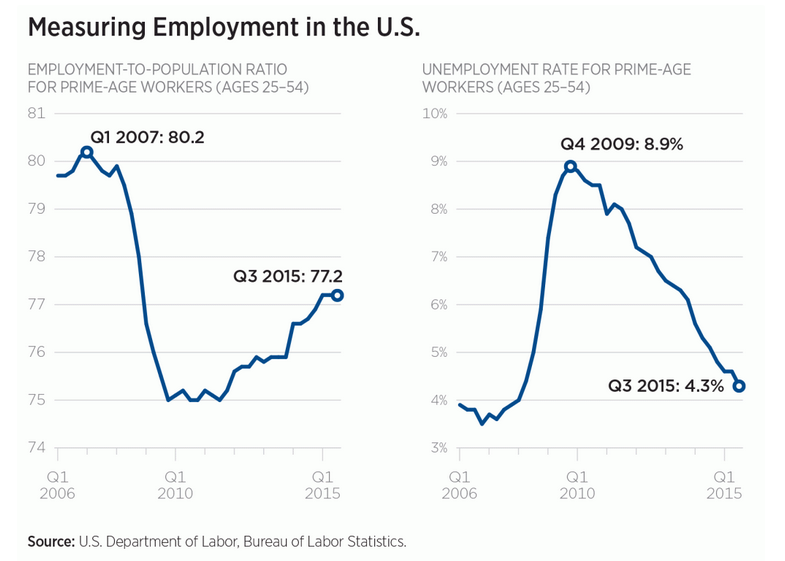
The economic recovery under President Obama has been weak. The Heritage Foundation posted the following graph of our unemployment situation:

EmploymentInTheUSThat tells part of the story, but there is another part that is not being widely told. The Washington Free Beacon posted a story yesterday showing that more foreign workers are employed in America than Americans. That is not encouraging news.

The article reports:

A record-high average of 24,963,000 foreign-born workers were employed in the United States in 2015, according to data released Thursday by the Bureau of Labor Statistics.

According to the bureau, foreign-born individuals include legally admitted immigrants, refugees, temporary residents such as students and temporary workers, and undocumented immigrants.

The bureau began recording this data in 2002. At that time, there were nearly 19 million foreign-born workers employed in the United States. The number has increased by 31.4 percent since then.

While the average number of native-born workers employed also reached a record high in 2015, it did not increase at the same rate as foreign-born workers. In 2015, there were an average of 123,871,000 native-born workers employed, up from 117,487,000 workers employed in 2002, an increase of 5.4 percent.

Additionally, the bureau found that the unemployment rate for foreign-born persons was 4.9 percent for 2015, lower than the 5.4 percent unemployment rate for the native born.

I suppose there are a lot of reasons for hiring foreign-born workers–foreign-born workers are generally willing to work for a lower wage than American workers, foreign-born workers may have a better work ethic than the one we have been teaching Americans, and foreign-born workers may be more inclined to take jobs Americans are not interesting in doing. It may be in a company’s best interest to hire foreign-born workers for the above reasons.

So what is the solution? One thing that might help would be to link the number of visas available to foreign-born workers to the number of jobs available. I have no objection to a legal alien working in America as long as he is not taking a job away from an American. Disney is the poster child for replacing American workers with foreign workers (see article in the Orlando Sentinel).

Meanwhile, until the American people stand up to our government and ask them to limit the number of foreign-worker visas so that it corresponds to the jobs available, Americans will be out of work. Corporations have lobbyists, and those lobbyists strongly encourage Congress to allow more foreign workers in so that corporations can cut their cost of doing business. That is why no one has closed our southern border–corporations make more money by hiring illegal aliens as workers. Until we have someone in Washington in power who is not bought and sold by corporate interests, we will not have a secure southern border and American workers will not be secure in their jobs.