The Impact Of The Trump Tariffs

On Tuesday, Amuse on X posted an article about the impact of President Trump’s tariffs.

The article reports:

Less Than Two Years of Trump Tariffs and Tax Cuts Generated $11.2 Trillion in US Investment 

Biden’s Scoreboard Was $1 Trillion in 4 Years. Trump’s Is $11.2 Trillion in just 20 Months.

This month, in Donaldsonville, Louisiana, Hyundai and POSCO broke ground on a $5.8 billion electric-arc mill built to pour 2.7 million tons of automotive sheet metal a year. It is the first purpose-built automotive mill of its kind in the country, and it anchors Hyundai’s $26 billion American program. Officials put the local effect at 1,300 direct jobs and roughly 4,000 indirect ones, with the first coil targeted for 2029. The steel is meant for vehicle bodies assembled in Alabama and Georgia, coil that would otherwise have been stamped from imported steel. Contractors are already on the site in Ascension Parish.

…Liberation Day tariffs put a charge on access to the American consumer and turned the world’s richest market from a free good into a scarce one. The July 2025 tax law then changed the plant’s return. 100% expensing of equipment and qualified production property lets a firm deduct the full cost of a factory in the year it builds it. Power finished the argument for the projects that swallow electricity. American energy abundance made the American data center and the American fab among the few sites that can feed an AI load at scale. European industrial power is still expensive, and several Asian grids cannot promise the same firm load on a construction calendar, which is why data centers and leading-edge semiconductor fabs keep landing here. Reciprocal trade frameworks did the last piece of work. Tariff relief became a multi-year investment vehicle from Japan, South Korea, Taiwan, the UAE, Saudi Arabia, and Europe’s industrial champions. Lutnick stated the bargain plainly. If you make it here, you don’t pay tariffs, but if you don’t, be prepared to pay to enter the greatest market in the world. Kevin Hassett, the president’s economic adviser, added the tax half. Tariffs are pushing people to onshore activity, and expensing is making them want to invest like crazy.

The article concludes:

Alexander Hamilton wrote in 1791 that a country’s independence and security are materially connected to the prosperity of its manufactures. The Marshall Plan spent about $13 billion in then-dollars, roughly $170 billion today, rebuilding allied industry so that allies could buy American goods. What is underway now runs that sequence the other way. Allied treasuries and allied champions are rebuilding American industrial capacity as the price of admission to the American customer. For four decades America gave its market away and watched the factories follow the giveaway. This term reversed the bargain. If you want the customer, you build the plant here, and in the strategic sectors the taxpayer keeps a warrant. Today, that claim is $11.2 trillion in announced commitments, a steel mill rising in a Louisiana parish, and a stock certificate in the public’s name.
When The Facts Disprove The Narrative

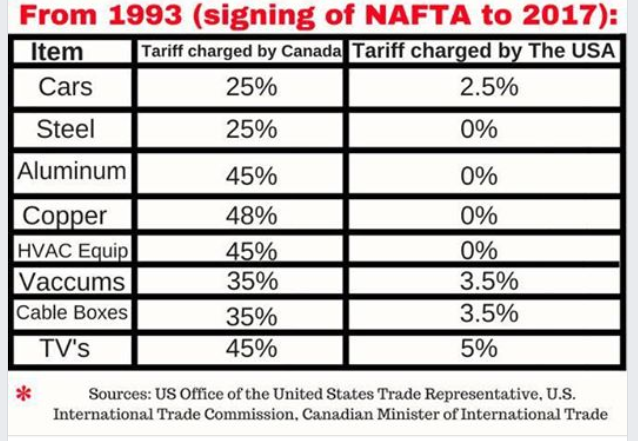
When President Trump took office, he instituted policies to level the playing field in trading between America and other countries. The tariff system that was in Place when President Trump took office was not beneficial to America. The mainstream media immediately began clutching their pearls and claiming that the tariffs were going to send inflation through the roof. Funny, they never said much about inflation going through the roof when President Biden was in office.

On August 17, Zero Hedge reported the following:

Update (1020ET): President Trump rage-posted about the lack of inflation amid all the tariff-fearmongering…

Trillions of Dollars are being taken in on Tariffs, which has been incredible for our Country, its Stock Market, its General Wealth, and just about everything else.

It has been proven, that even at this late stage, Tariffs have not caused Inflation, or any other problems for Country, other than massive amounts of CASH pouring into our Treasury’s coffers.

Also, it has been shown that, for the most part, Consumers aren’t even paying these Tariffs, it is mostly Companies and Governments, many of them Foreign, picking up the tabs. “

Then took direct aim at Goldman Sachs:

“But David Solomon and Goldman Sachs refuse to give credit where credit is due.

They made a bad prediction a long time ago on both the Market repercussion and the Tariffs themselves, and they were wrong, just like they are wrong about so much else.

I think that David should go out and get himself a new Economist or, maybe, he ought to just focus on being a DJ, and not bother running a major Financial Institution.”

Ouch!

The article includes a number of graphs explaining exactly what items have increased in price and by how much. Please follow the link to read the article.

The Impact Of The Tariffs

On Wednesday, The American Thinker posted an article about the tariffs President Trump has put in place since he took office.

The article reports:

Far from igniting the inflationary firestorm predicted by his critics, Trump’s sweeping tariffs — including a 10% universal import duty and targeted hikes on 90 nations — have coincided with the lowest inflation rate since early 2021.

In a striking reversal of the narrative pushed by many economists, The Economist—a publication not known for its support of Trump’s policies — published a June 5 article acknowledging the muted inflationary effect of the tariff wave. The magazine pointed to hard data: in April, year-over-year inflation cooled to just 2.3%, far below the 0.8-point spike predicted by a University of Chicago survey of 48 economists.

Instead of tariff-fueled price hikes, the Bureau of Labor Statistics showed that prices for heavily impacted goods like clothing and new cars actually declined.

Car prices dropped by 0.5% from March to April, despite 25% tariffs on auto imports going into effect on April 3. Clothing prices remained flat through March — even as progressive economists sounded alarms. Far from passing on costs, many retailers and foreign producers appeared to absorb them, underscoring the competitive nature of global commerce in a post-pandemic landscape.

Even groceries — arguably the most politically sensitive prices of all — held steady through May, despite new duties on Canadian produce and other perishables. Consumers, in short, weren’t being punished at the checkout line.

Of course, none of this was supposed to happen.

The article concludes:

As the trade deficit narrows and the factory floors hum a little louder, it’s increasingly clear: this was no reckless gamble. It was strategy. And it’s working.

While some still mutter darkly about future price spikes, the facts on the ground are sobering — and for Trump’s critics, humbling. Inflation remains tame, shelves are stocked, and voters aren’t paying more to put dinner on the table. The tariffs are not only holding; they’re delivering.

This is what happens when a businessman instead of a politician becomes President. Can you imagine how much celebrating there would be in newsrooms if a Democrat had accomplished even half of what President Trump has accomplished? I am hoping that as Americans begin to realize the economic gifts they have received in the past six months, they will at least vote to keep control of Congress in the hands of the Republicans. That is the only way this success will continue.