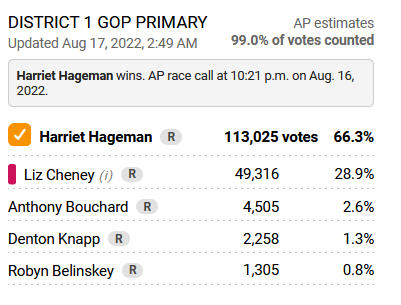
Ranked-choice voting (RCV) has been put in place in various voting districts in America. The supporters of this idea claim that it gives voters more of a choice in elections. Actually, it does a really good job of confusing voters and electing peoples’ second choices rather than their first choices. For instance–if five people vote for candidate A, four people vote for candidate B and three people vote for candidate C in the usual election process, candidate A wins. In RCV, if seven people listed candidate C as their second choice and no other voters listed a second choice, candidate C would win. It’s a confusing system where no one wins.
On February 27th, Alaska Public Media reported:
A ballot measure to repeal Alaska’s ranked choice voting and return to a partisan primary has cleared an initial review.
Lt. Gov. Nancy Dahlstrom, who heads the Alaska Division of Elections, announced Tuesday that sponsors of the anti-ranked choice initiative gathered nearly 37,000 signatures — about 10,000 more than necessary. She said the state is still in the process of verifying all the signatures.
Phillip Izon, director of the group sponsoring the repeal, said he doesn’t expect they’ll have any trouble meeting the threshold.
“We did a lot of work on validation, verification. Spent many months on it. So we feel very confident,” he said.
The signatures come from 34 of Alaska’s 40 voting districts – four more than the law requires.
Alaskans for Better Elections is defending the new voting system and campaigning against repeal. Its director, Juli Lucky, said her group heard of anomalies in the signature-gathering process, so they plan to examine the petitions once they’re made public.
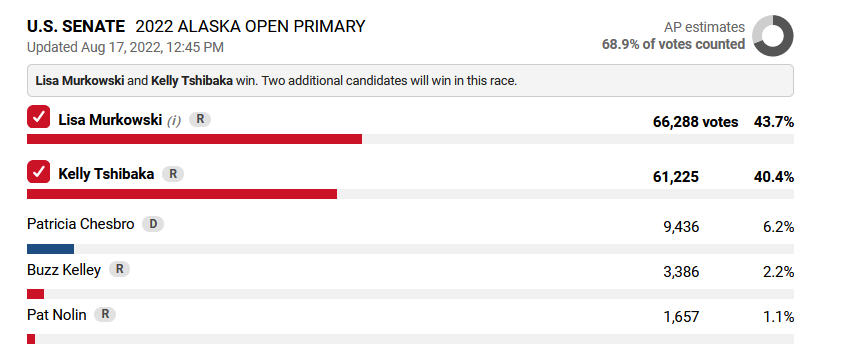
The implementation of RCV is Alaska is probably responsible for the fact that Lisa Murkowski currently represents the State of Alaska in the Senate.